So what did you think of season three, Sherlockians? If your chips (that's "french fries" to you, Americans) aren't falling in slow motion to the floor, something must have gone terribly wrong in your mind palace.
Speaking of mind palace, the writers of BBC's Sherlock seem to have theirs well kept. What exactly is it that Mark Gatiss, Steven Moffat and Stephen Thomspson have in their toolbox that makes each episode from season three so successful among fans? Well! Using a little deduction, we can discover the seven must-haves every fandom should have:
(Don't worry. The spoilers aren't
that bad.)
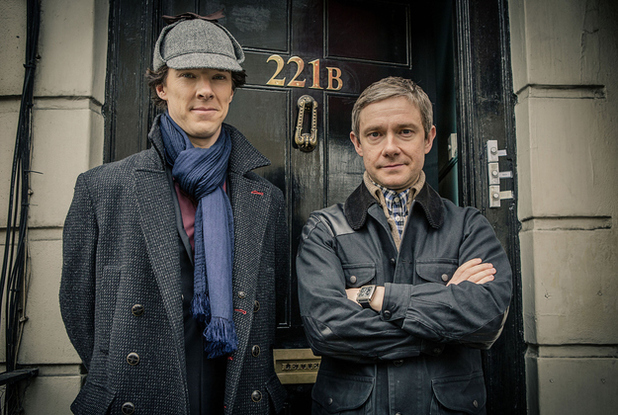
1. Characters from both ends of the pole. This is true for any story, not just the ones with extensive fandoms. If positives and negatives go together in science, the same is true for storytelling. Character contrast is key. Put together the melancholic, no-nonsense, practical doctor with the unconventional, genius, high-functioning sociopath. BOOM. The personality contrast between John and Sherlock is classic. Sometimes personality clashes make for the best of friendships. Sounds a bit like real life, doesn't it?
2. Puzzles. Must we reiterate that fandoms are made up of about 99.9 percent nerds? Nerds are smart. They like figuring things out, so give them a puzzle. The way "Sherlock" does it is by cutting back and forth between scenes and story arcs. Take "The Empty Hearse" as an example: you get a scene of Sherlock faking his death, then a scene of Sherlock trying to
dismantle an underground bomb, then another scene of Sherlock faking his
death, then you're back to the bomb scene again. By the time you get to the end of the 90-minute episode, you have a bunch of disorganized pieces from every scene ...and finally, all pieces fit together within the last five minutes. So keep your nerdy audience guessing, but make sure it makes sense at the end.
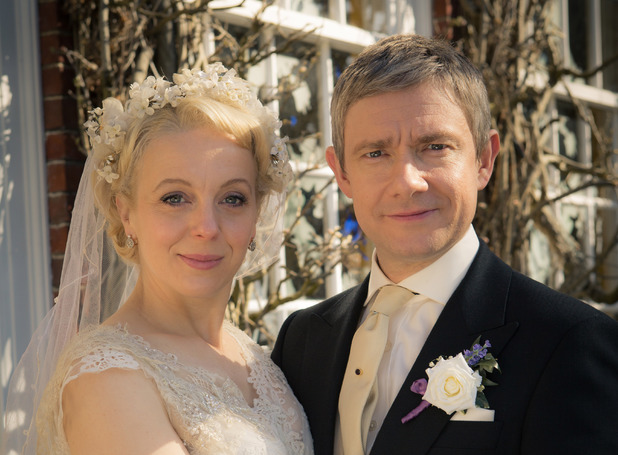
3. Arcs. It's boring if the only story we followed was Sherlock solving the day's crime. Story arcs add dimension. In season three, we find the sub-story of John and Mary and the twists and turns that rock their newlywed relationship. And, just like point number two ("Puzzles") described above, the sub-story finds a way to connect with the main story.
4. Jokes. Anything too serious is prone to parody, and fandoms have the power to get at any story that is taken too seriously. So, liven up the script with jokes. The best time to have a joke is when the tension has reached its highest. Have your characters pour out their inmost beings to one another seconds before their impending death--then joke about it. Or you can pull off a Sherlock/Moriarty. You know what I'm talking about.
5. Catchphrases. Catchphrases have this way of unifying an audience and henceforth strengthening a fandom. How many Sherlockians posted "The game is on" during the season three premiere? You know the drill.
6. Feels. The story can't just be all fun. It has to hit home, and it has to hurt--right in the feels. The undeniable theme of season three is the friendship between Sherlock and John. The theme must drive the storyline. The theme is the reason why the characters act the way they act, choose the choices they make and take the story wherever the story ends up. Theme adds depth. That's why fans love "Sherlock."
7. Homage to the fans. The writers are no-doubt well aware of who their fans are. They even put the fans in the show, so to speak, by making a character that encompasses them all. The character's name? Anderson.
With all those steps in the toolbox, season three is easily the best season of "Sherlock" yet. And it doesn't make the long wait until season four any better.




No comments:
Post a Comment